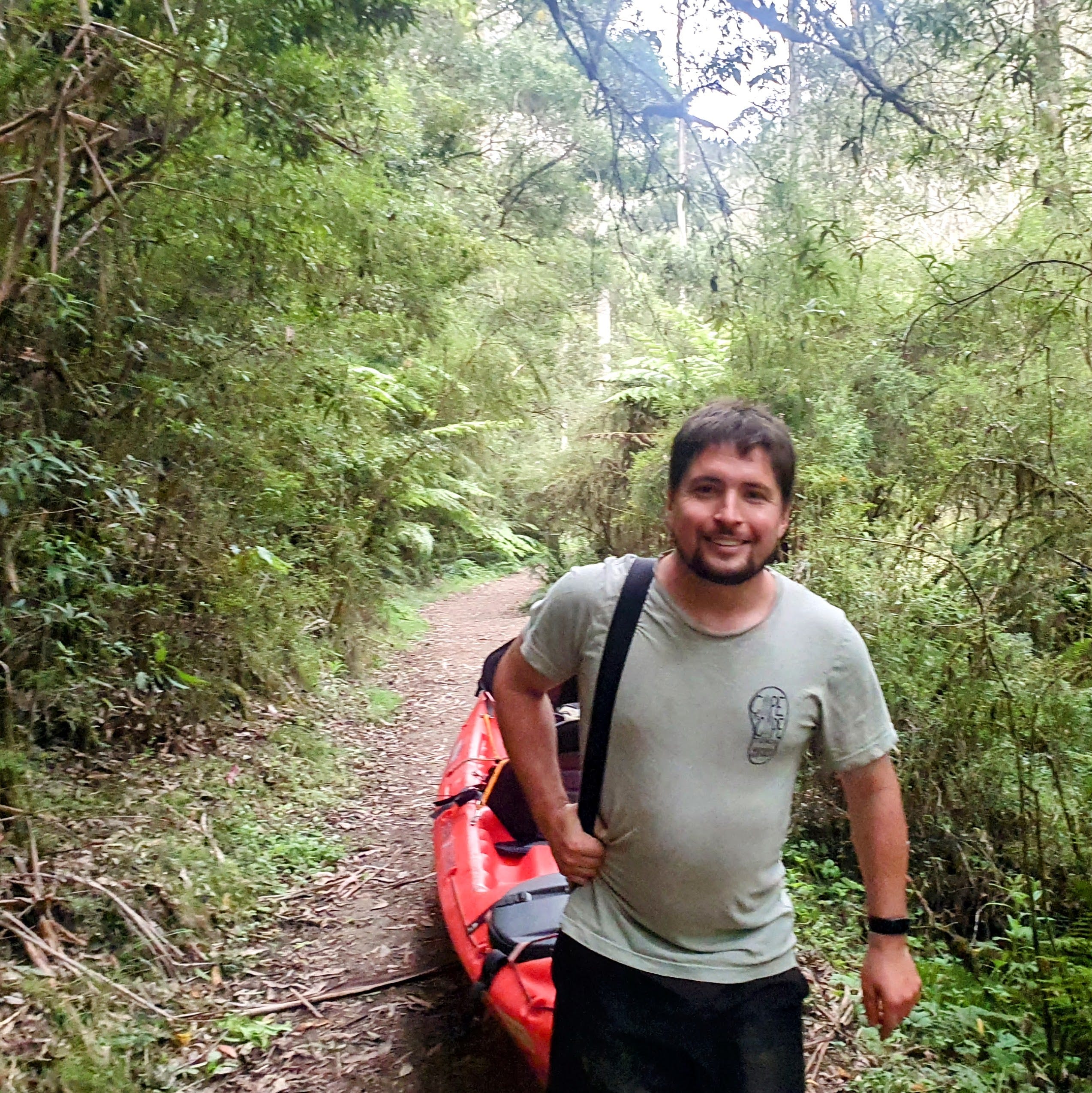
In the summer of 2023/2024 Leanne and I were making our way from Western Australia to Tasmania. Following a tip from a tourist brochure we left the Great Ocean Road at halfway and headed for the town of Forest in the Otways in pursuit of platypuses and mountain bike trails.
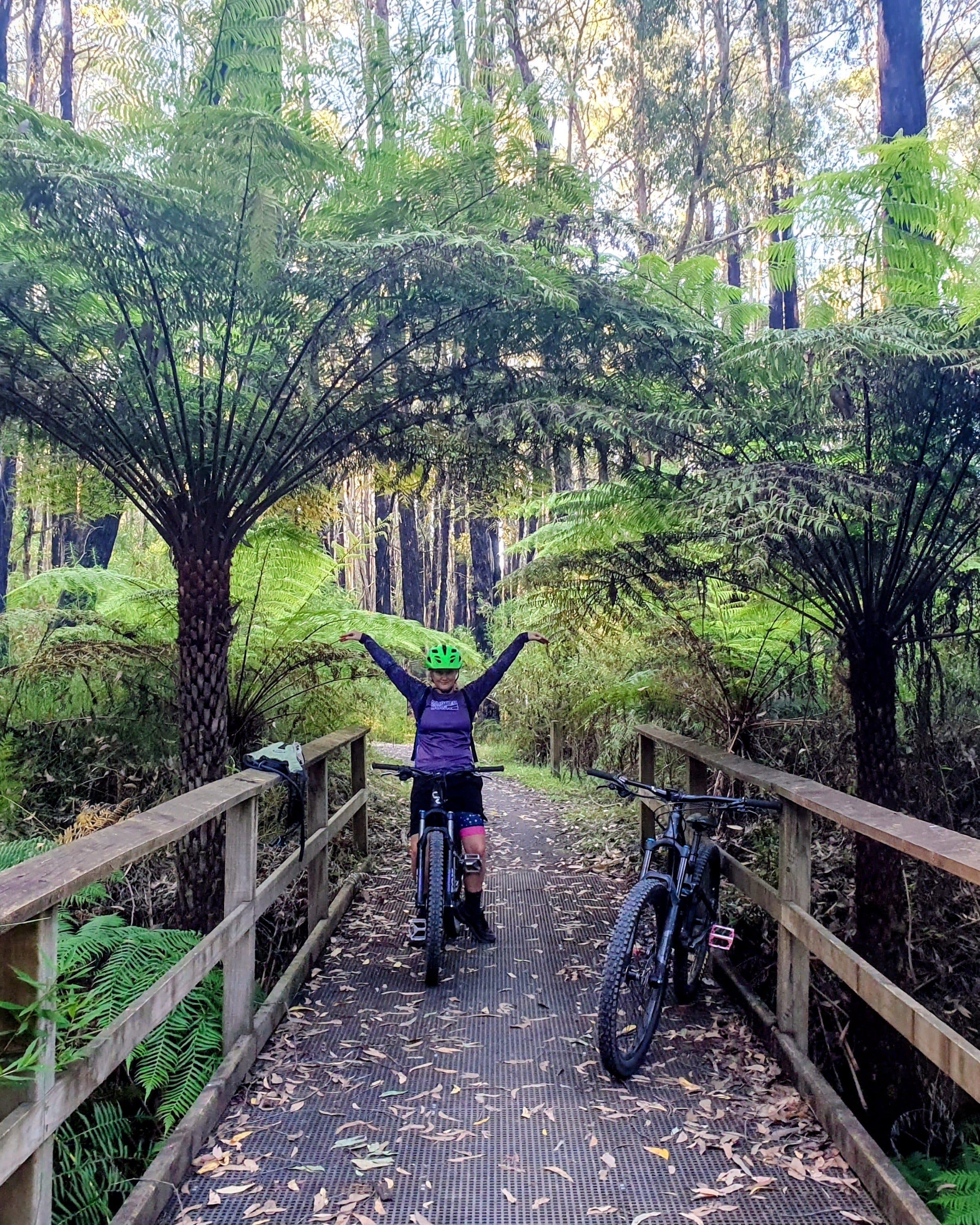
The rainforest scenery was incredible, and the landscape had plenty of elevation, but these were some of the worst-built mountain bike trails I have ever ridden. I was even more disappointed when I researched the project and found that the Victorian Government had invested $2.1 million to revitalise the network and boost tourism in the area. Contrasted with the Pemberton Arboretum Trails, it was a stark reminder of how much the quality of a trail network depends on its design and construction.
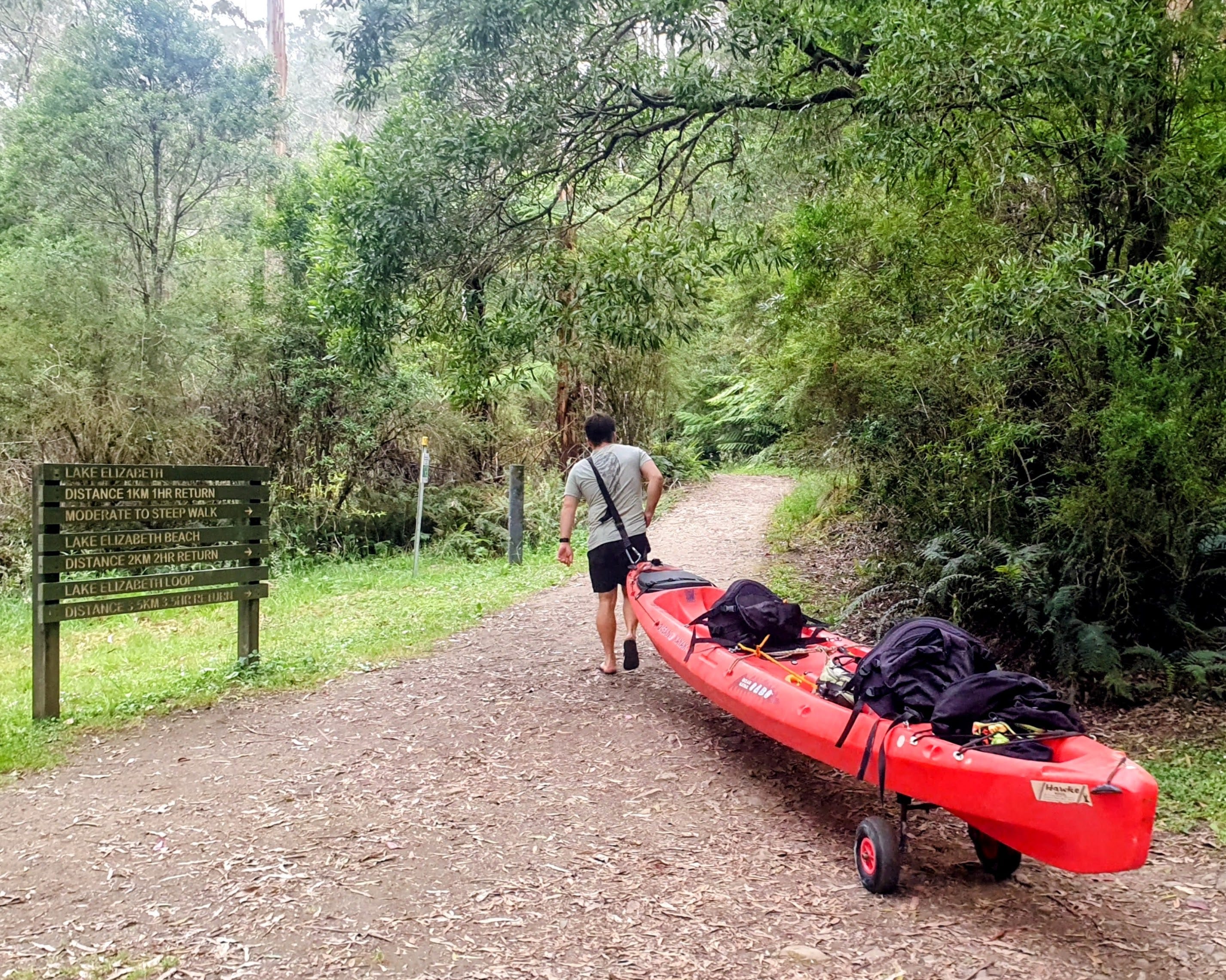
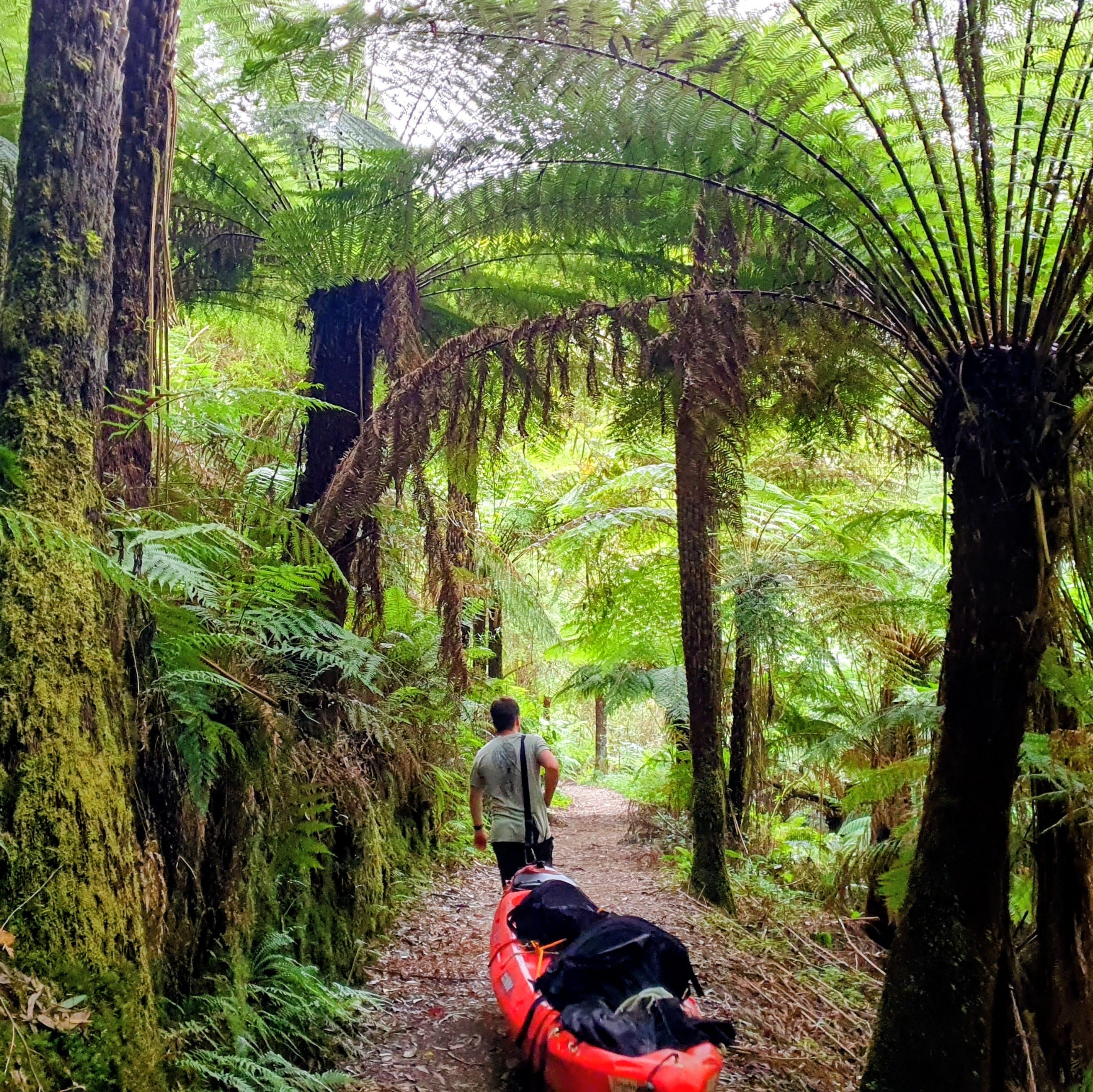
After our disappointing experience on the mountain bike trails, we turned our attention to the other reason we’d come to Forest: platypus viewing. We’d found a guided tour drifting in canoes on Lake Elizabeth at sunset, but decided to wheel our own kayak the 1km to the lake and do it ourselves, applying the portage skills we’d developed in Coral Bay.
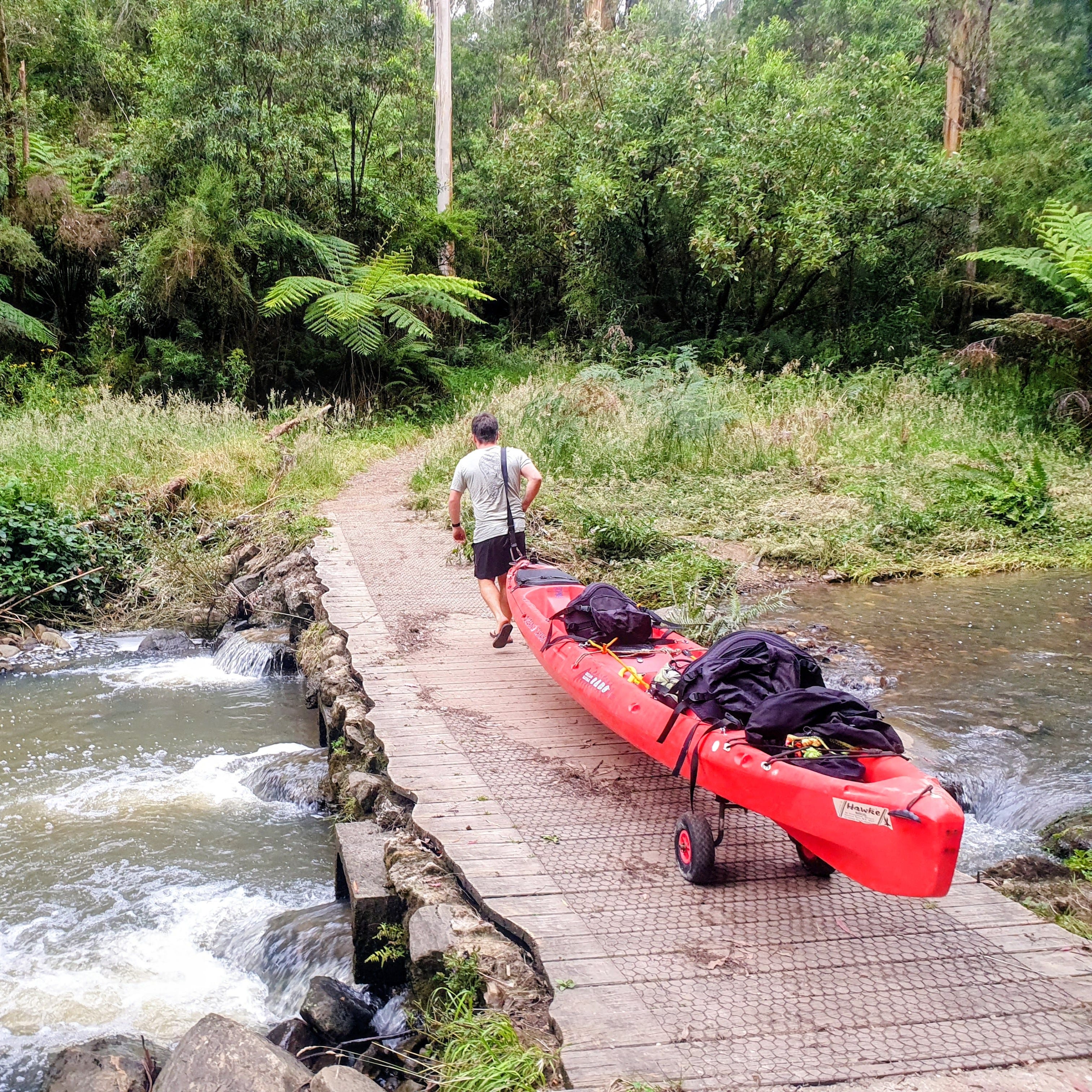
The trail started off gentle, and I chuckled to myself about the absurdity of wheeling a kayak over a creek.
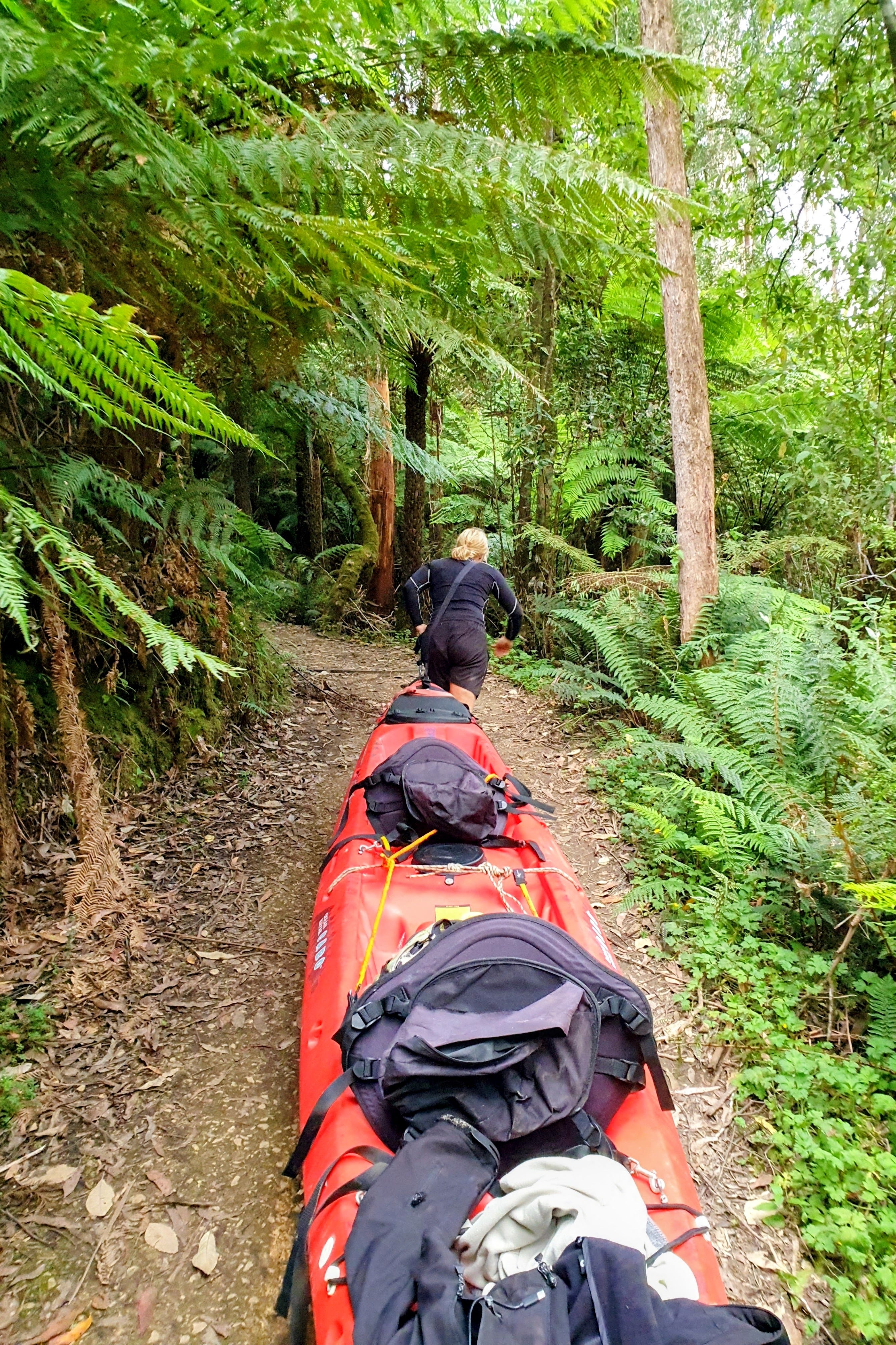
This didn’t last long, with the trail soon climbing through tight switchbacks requiring multi-point turns, and even some stairs!
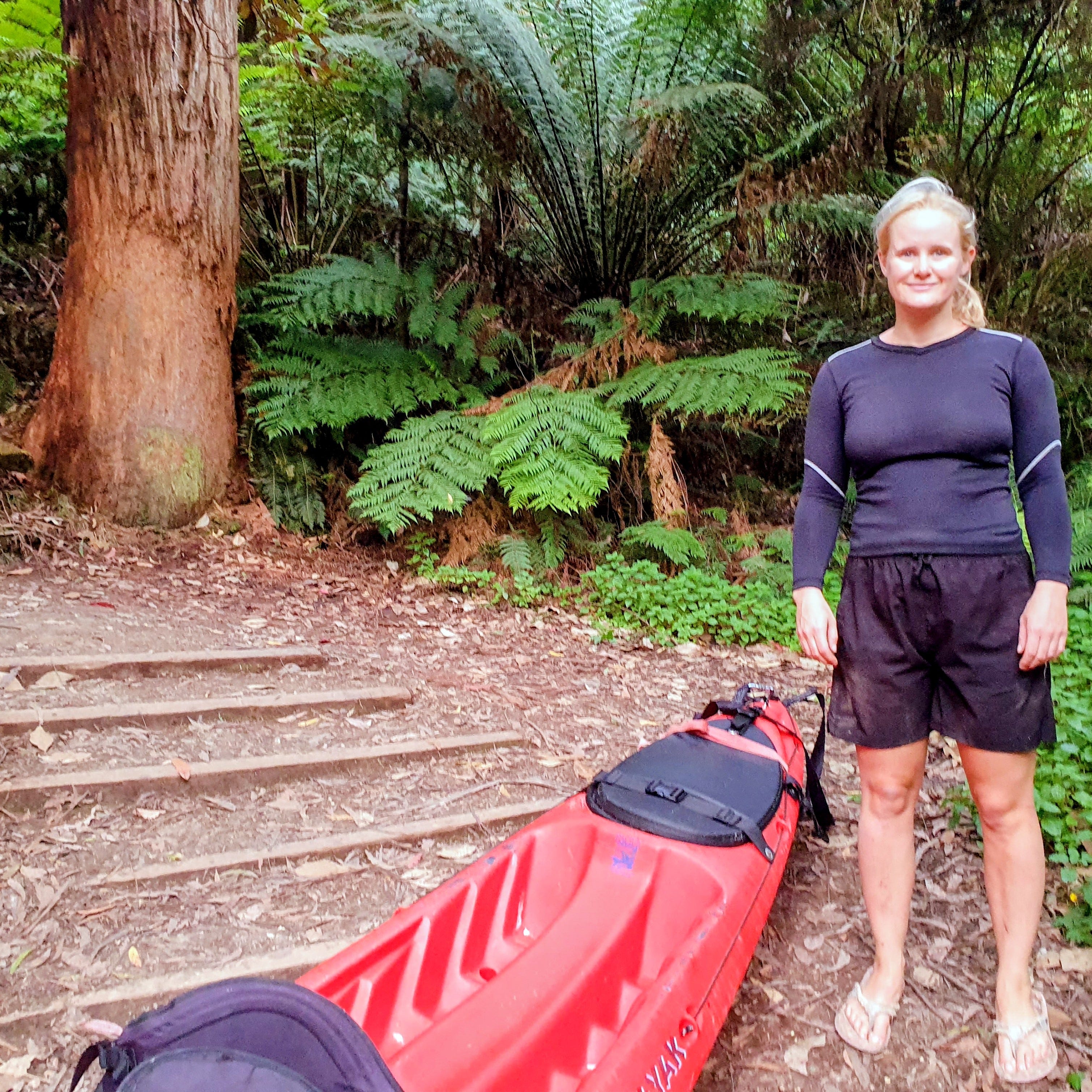
As we gained elevation, we were rewarded with misty views down the valley.
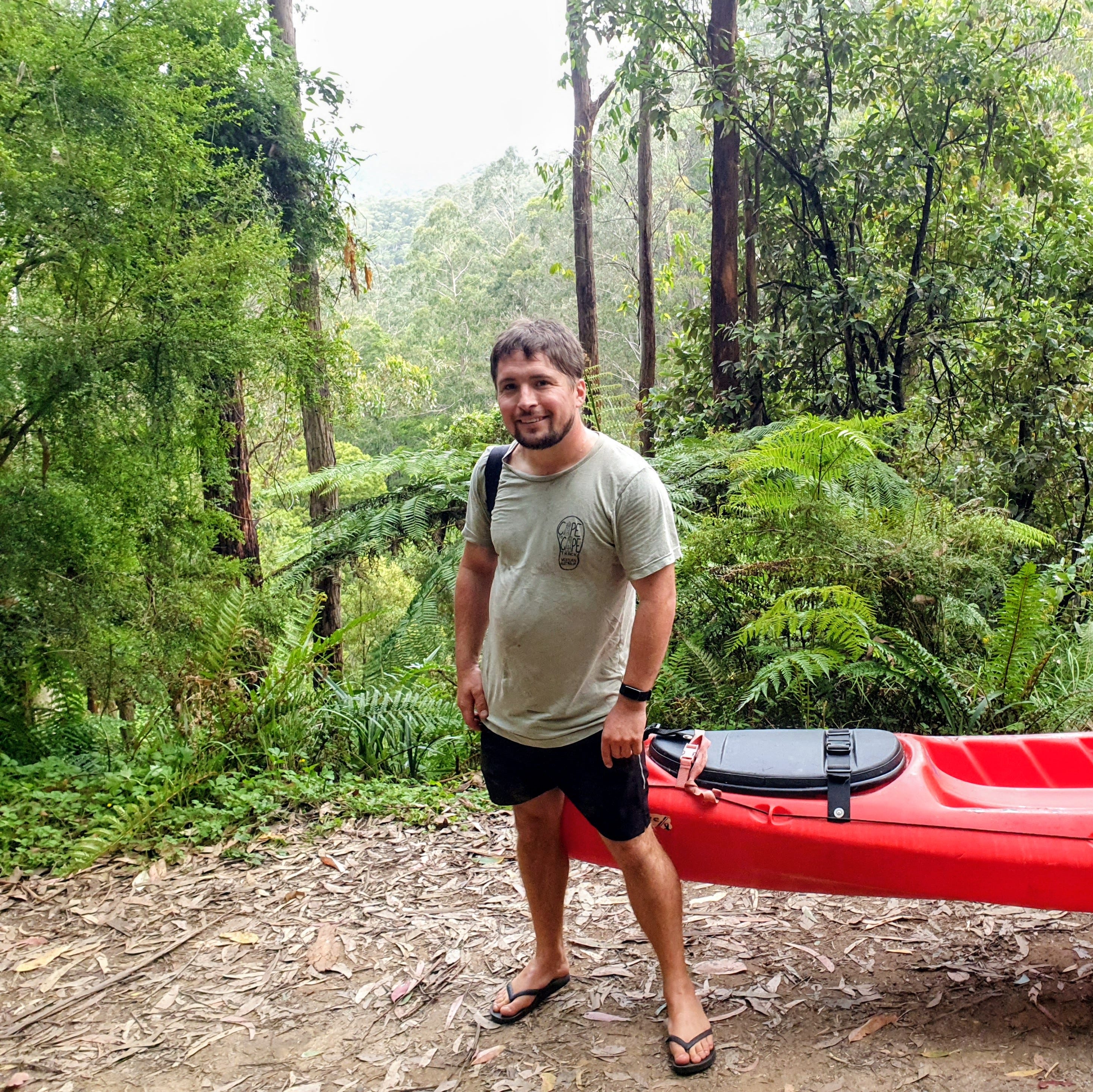
Platypus anticipation was building.
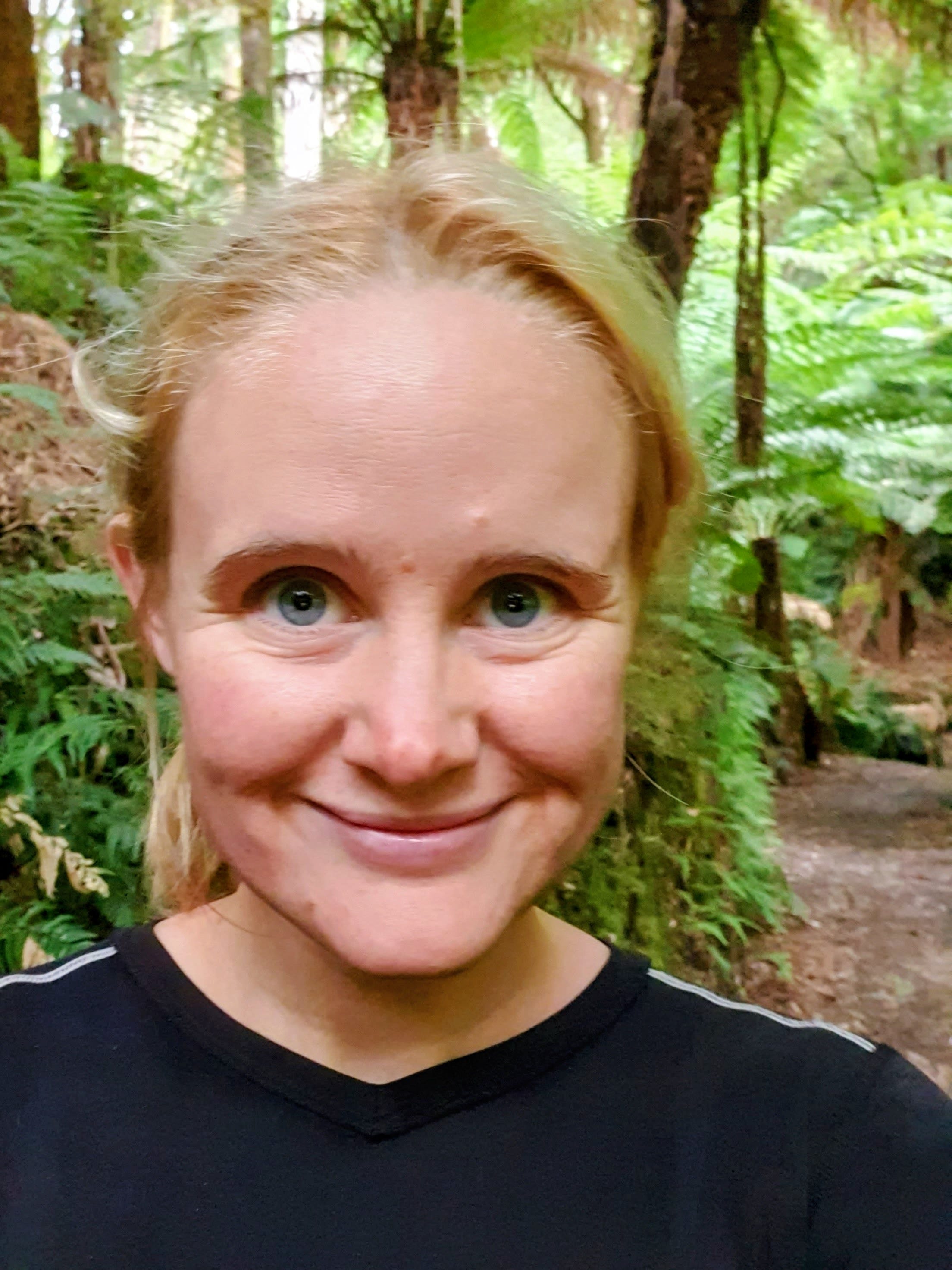
We arrived at the jetty and launched straight away, using the remaining light to appreciate the scenery.
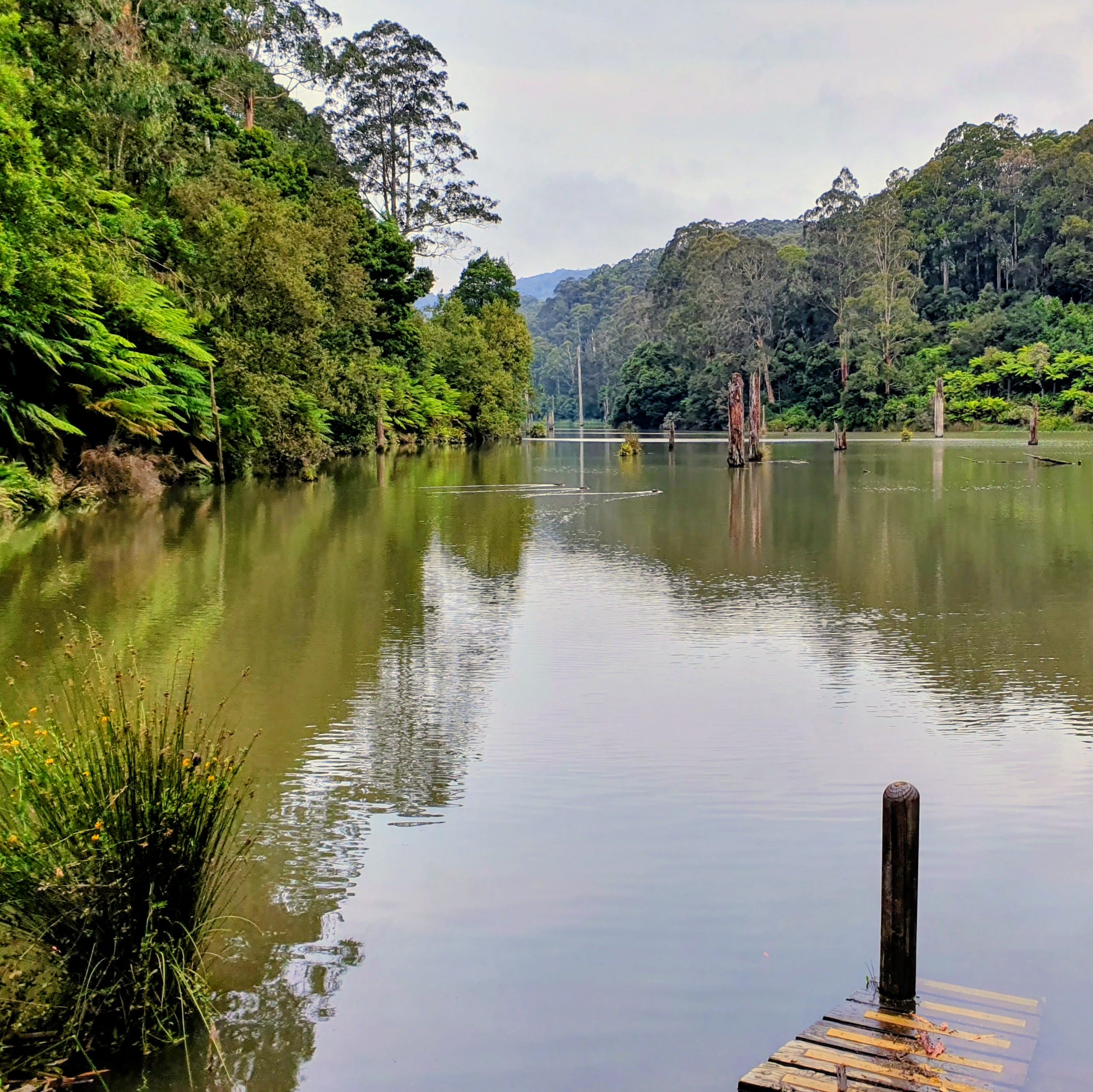
Lake Elizabeth is home to six platypuses, and we had frequent sightings as they surfaced from their dives, but each was brief and difficult to photograph.


After a while, the tour group joined us on the lake, and we drifted around separately, giving each other plenty of room.
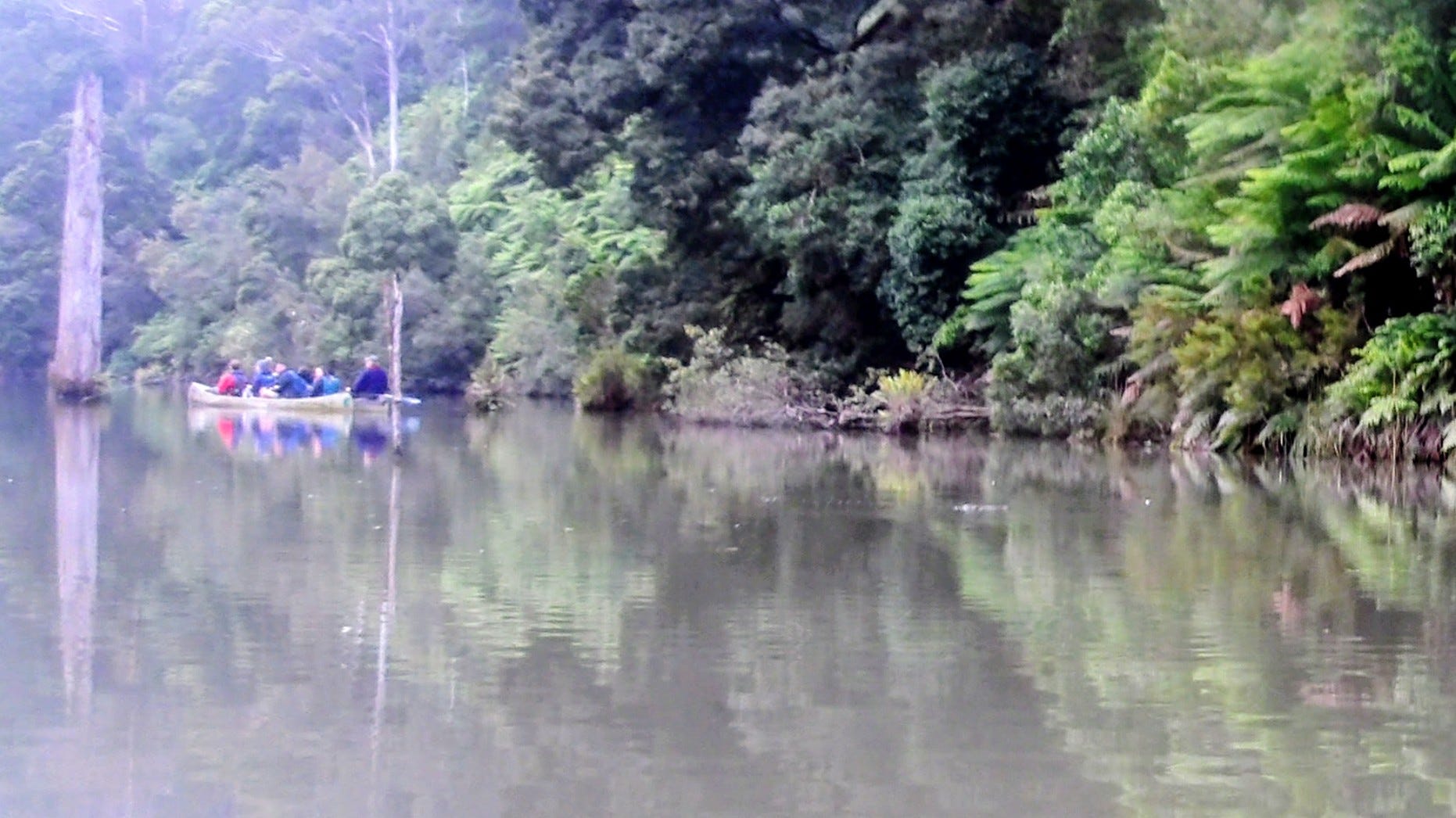
Eventually, the sightings grew less frequent as the light faded, so we headed back in.
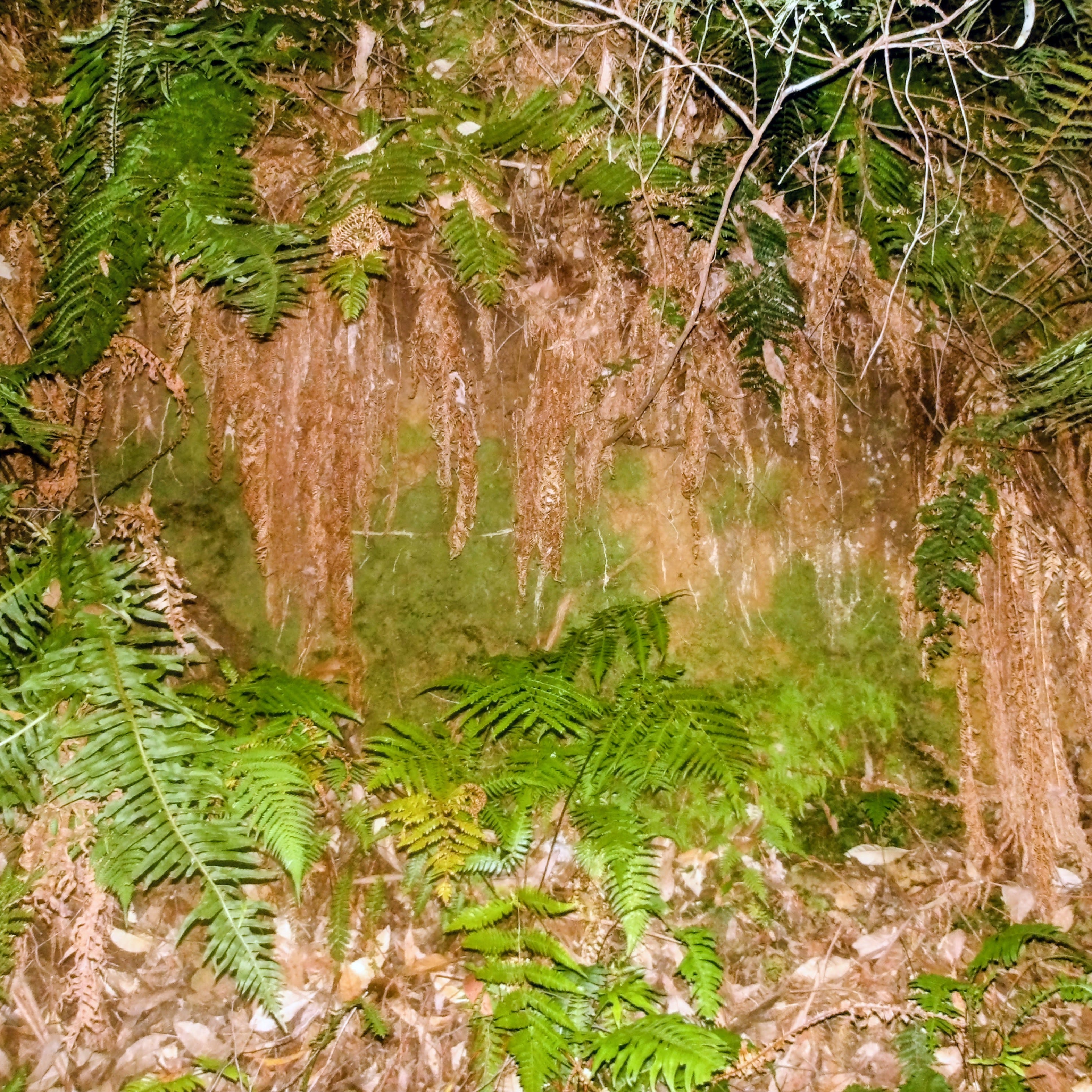
Retracing our steps down the trail, we found one more surprise: glow worms scattered across the earth banks where the trail had been cut into the hillside, glowing like tiny constellations in the understory.
The glow is produced by the larvae of fungus gnats, which use their bioluminescence to attract prey towards sticky threads hanging from their shelters. Seeing them glowing along the trail was a genuinely magical experience, although, like the platypuses, they proved almost impossible to photograph.